Captain Trey Croft
Rising Son Expeditions · Santa Rosa Beach, FL
It's the most common question I get when someone books a charter: "What should we target?" On Choctawhatchee Bay, the honest answer is almost always "both" — but if you want to focus your trip on one species, the choice between redfish and speckled trout comes down to what kind of experience you're looking for.
Both are year-round residents of the bay. Both are excellent fighters on light tackle. Both are outstanding table fare. But they behave differently, require different techniques, and shine in different seasons. Here's my honest breakdown to help you decide.
The Fight
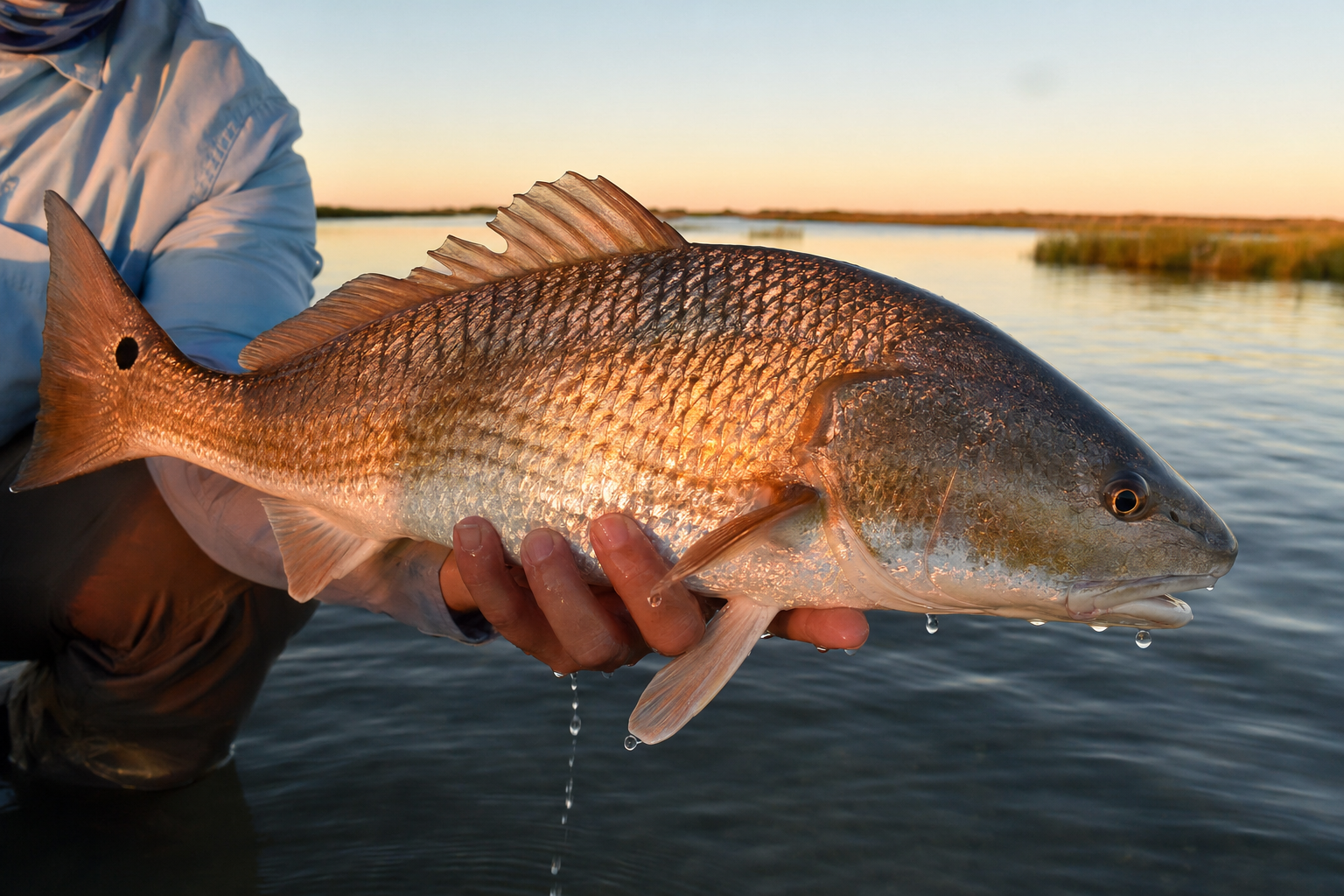
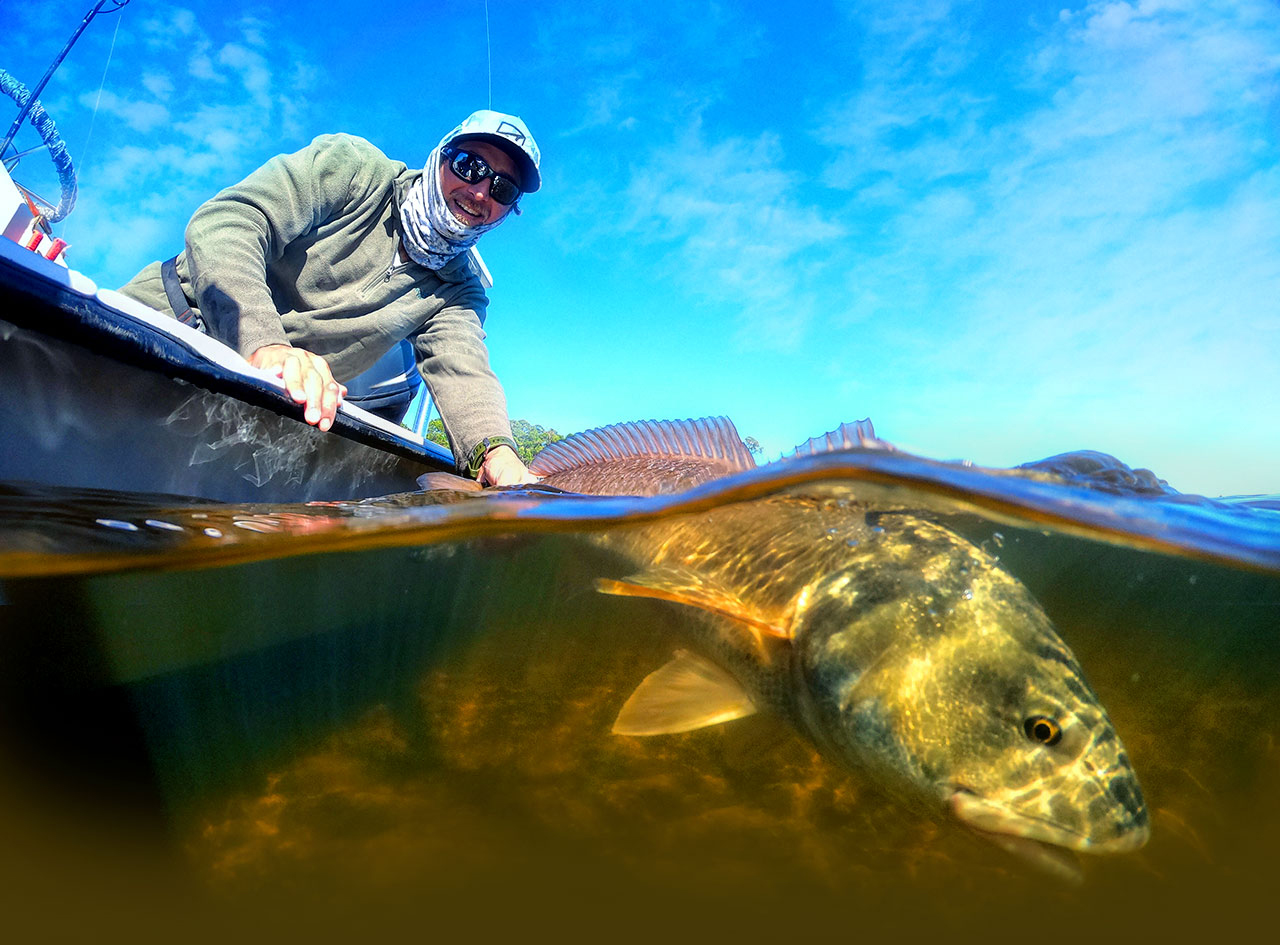
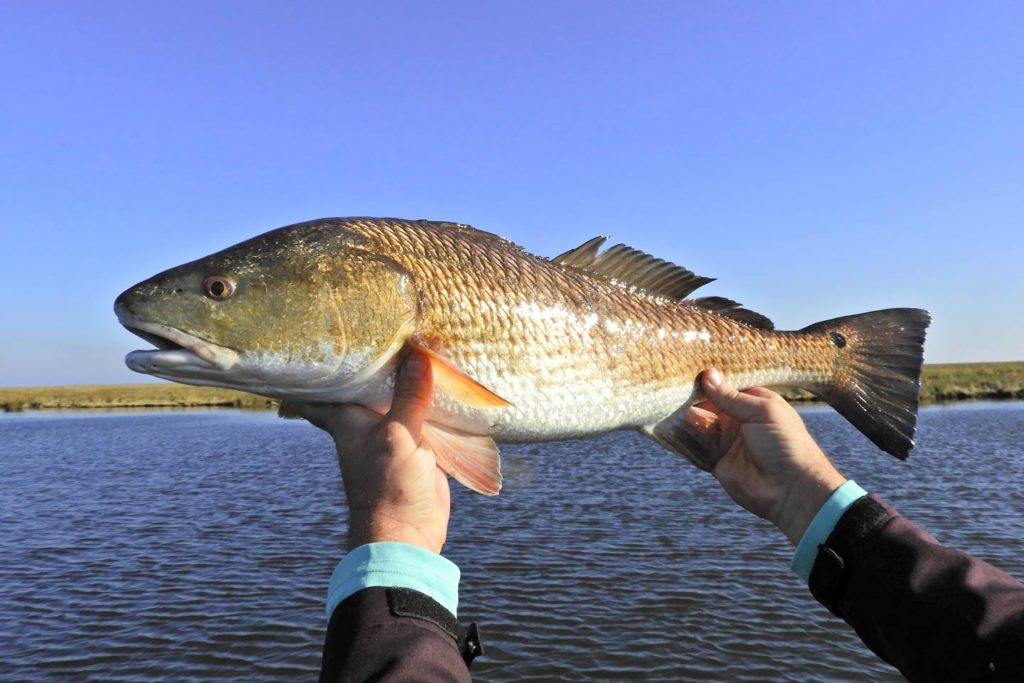
Redfish are built like tanks. When a slot red — or especially a bull red — gets hooked, it makes a powerful, bulldogging run that puts serious pressure on your drag. They don't jump; they pull. A 25-inch slot redfish in shallow water will feel like you've hooked a freight train, and a bull red pushing 30+ inches will test both your tackle and your patience. The fight is raw, powerful, and deeply satisfying.
Speckled trout are a different kind of fighter. They're more acrobatic — they jump, they shake, they make fast, erratic runs. A big trout over 20 inches is an absolute blast on light spinning tackle, and the explosive surface strike on a topwater plug is something that never gets old. Trout are more fragile than reds, with softer mouths that can tear if you apply too much pressure, which adds a finesse element to the fight that many anglers find genuinely exciting.
Captain Trey's Take
"If you want to feel the most powerful fish in the bay, target redfish. If you want the most exciting, unpredictable fight — especially on topwater — go for speckled trout. Honestly, I love both for different reasons, which is why most of my charters end up catching both."
Technique and Gear
Redfish are bottom-oriented feeders. They use their downturned mouths to root along the bottom for crabs, shrimp, and small baitfish. The classic approach is live shrimp under a popping cork on the grass flats, or cut mullet and soft plastics near structure. Sight-fishing for tailing reds in shallow water — watching for the copper flash or the tip of a tail — is one of the most exciting techniques in inshore fishing and is available on Choctawhatchee Bay from spring through fall.
Speckled trout are more versatile in their feeding behavior. They'll hit topwater plugs at dawn, live shrimp under a cork mid-morning, and slow-sinking lures in deeper water during winter. The variety of effective techniques makes trout fishing particularly interesting for anglers who enjoy experimenting with different presentations. Topwater fishing for trout on the grass flats at first light is, in my opinion, one of the most fun things you can do with a fishing rod.
Best Seasons
| Season | Redfish | Speckled Trout |
|---|---|---|
| Spring (Mar–May) | Excellent — slot reds on the flats | Good — moving onto flats as water warms |
| Summer (Jun–Aug) | Good — early morning grass flat action | Excellent — topwater at first light |
| Fall (Sep–Nov) | Outstanding — Bull Reds school up | Good — transitioning to deeper water |
| Winter (Dec–Feb) | Good — deep bayous and channel edges | Excellent — deep holes and channel drops |
Table Fare
Both species are excellent eating, but they have different culinary profiles. Redfish has firm, white, mildly sweet flesh that holds up beautifully to blackening — the classic "blackened redfish" preparation made famous by Chef Paul Prudhomme is one of the great dishes of Gulf Coast cuisine. Larger reds (over 27 inches, which must be released under Florida regulations) can be coarser in texture, which is why the slot-sized fish (18–27 inches) are considered the best eating.
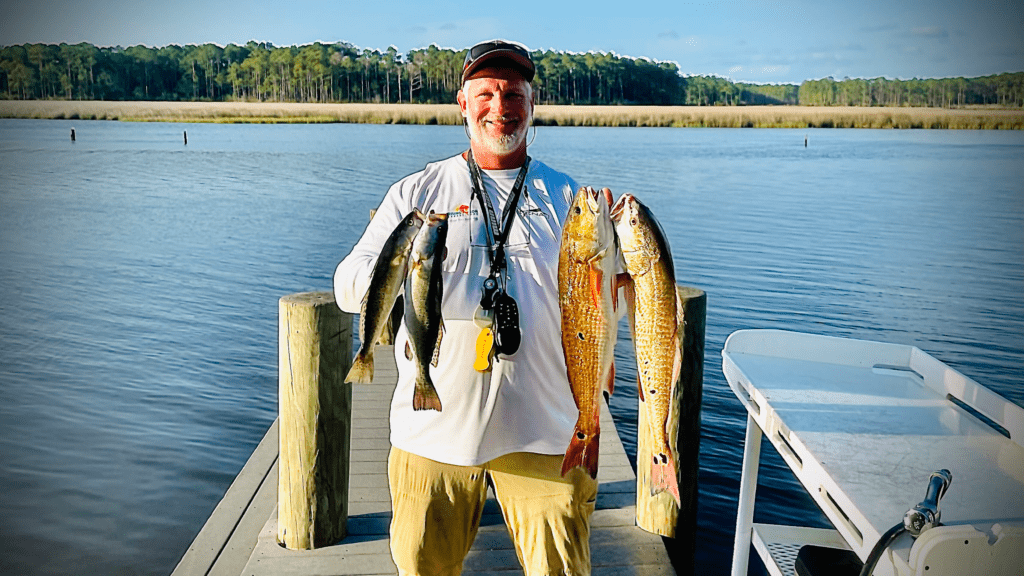
Speckled trout has a more delicate, flaky texture and a slightly sweeter flavor. It's excellent pan-fried, grilled, or baked, and it pairs beautifully with light seasonings that let the natural flavor come through. Many anglers who've eaten both side by side prefer trout for its more refined taste, while others swear by blackened redfish. The honest answer is that both are outstanding, and a mixed bag of reds and trout makes for an exceptional fish dinner.
Regulations: What You Need to Know
| Species | Size Limit | Bag Limit |
|---|---|---|
| Redfish (Red Drum) | 18″–27″ slot limit | 1 per person per day |
| Speckled Trout | 15″ minimum | 5 per person per day |
Note: Regulations are subject to change. Always verify current FWC regulations before your trip. Your charter captain will ensure all regulations are followed.
The Verdict
If you're visiting Choctawhatchee Bay for the first time and want the most iconic inshore experience, target redfish. The sight-fishing on the grass flats, the powerful fight, and the chance at a trophy bull red in the fall make redfish the quintessential Gulf Coast inshore experience.
If you're a more experienced angler looking for technical challenge and variety — or if you want to maximize your chances of a fish dinner — add speckled trout to the mix. The topwater bite in summer is genuinely spectacular, and a mixed bag of reds and trout is hard to beat for both action and the table.
Let's Go Catch Both
On most charters, we target both redfish and speckled trout. Book your trip and let Captain Trey put you on the fish.
Book Your Charter →